


Essential Branches of Artificial Intelligence: Your Guide to an Amazing Future
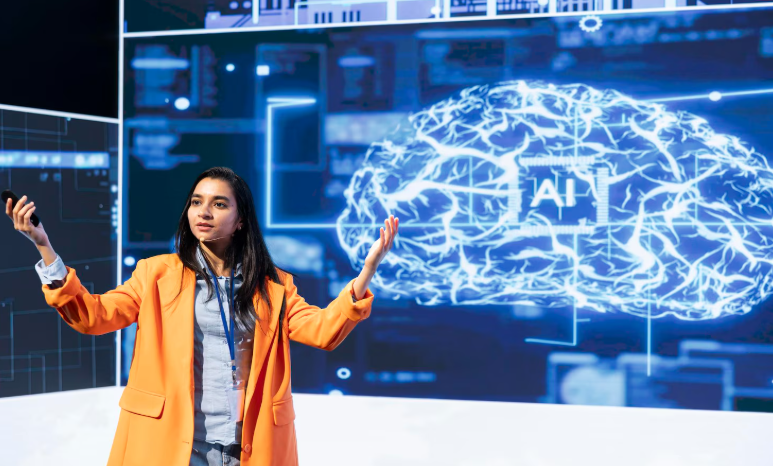
Have you ever wondered about the incredible world of Artificial Intelligence (AI)? It’s like asking how a superhero works! We see AI everywhere, from the smart speakers in our homes to the video games we play. You might think of AI as one big thing, but actually, it’s a giant tree with many specialized branches of artificial intelligence. These branches are the different superpowers AI has. Understanding them helps us see how computers can learn, see, talk, and even create things, just like us.
Artificial intelligence is simply making machines smart enough to solve problems and act like humans.
This article is your special map to this amazing tree. We will look closely at each branch, and we’ll figure out exactly what it does. Get ready to dive into the most exciting parts of technology! We’ll look at real-world examples you can try. Plus, we will see why learning about AI is such an incredible way to start your future right now. That sounds exciting, right?
Check our post on: Why AI Is Getting Trendy?
What Is Branches of Artificial Intelligence? Lets dive in!
What are the branches of artificial intelligence? Think of AI as the entire universe of smart machines. The branches are the major subjects, or fields, inside that universe. Each branch focuses on a different part of human intelligence.
Why do we divide AI into branches? We do this because teaching a computer to see is totally different from teaching it to talk. Imagine a basketball team. You have players who specialize in scoring, and others who specialize in defense. AI is the same way!
These core branches are the foundations of almost every cool AI product you use every day. We will look at the top five most important ones right now.
1. Machine Learning (ML)
Do you remember when you learned to ride a bike? You didn’t read a manual. You tried, you failed, and you adjusted. That is exactly what Machine Learning (ML) is like.
Machine Learning (ML) is the most important branch of modern AI. It lets computers learn from data without being explicitly programmed. Instead of telling the computer exactly what to do, we give it a ton of examples. The computer then finds patterns in that data. Machine Learning (ML) is why your Netflix suggests a new show you might like. It’s also why Spotify knows which songs you will love next.
How does ML work? It’s a process of trial and error, just like training a puppy!
Here is a simple example:
We want a machine to recognize a picture of a cat.
- Input: Show the machine 10,000 pictures of cats and 10,000 pictures of dogs.
- Training: The ML algorithm looks at details. It learns that cats often have pointed ears and dogs often have wet noses.
- Output: When you show it a new picture, it uses its learned patterns to guess if it is a cat or not.
If it guesses wrong, we tell it the right answer. Then the ML algorithm adjusts its internal rules. It gets better and better over time. That is the genius of Machine Learning (ML)!
Check our post on: AI Nails- Your Ultimate Guide to Artificial Intelligence in Manicures
Did You Know?
In 2025, 78% of all organizations worldwide are using AI in at least one part of their business! This surge shows just how essential Machine Learning (ML) has become.
2. Deep Learning (DL)
Deep Learning is not a separate branch. It is a super-powerful subset of Machine Learning (ML). You can think of it as ML on steroids. It is what made AI truly take off in recent years.
What makes it “deep”? Deep Learning uses something called Neural Networks. These networks are structured like layers of brain cells in your own brain. They have many, many layers. This “depth” allows the system to process incredibly complex, unstructured data.
Deep Learning is used for things that are really hard for regular ML. This includes recognizing speech, powering self-driving cars, and creating new content (Generative AI). It requires huge amounts of data and powerful computers. That is why it’s so new and exciting!
Activity: Compare ML and DL
Imagine you want a program to spot fraud in credit card use.
- ML Approach: You program rules like “If the card is used in two different countries in one hour, flag it.” (Human-programmed rules).
- DL Approach: You feed it billions of transaction records. The network automatically discovers subtle patterns. It finds things a human would never notice. For example, it sees a pattern where small, unusual purchases happen right before a huge purchase. (Machine-discovered rules).
3. Natural Language Processing (NLP)
Have you ever chatted with a customer service bot online? Or maybe you asked your phone assistant a question? That is Natural Language Processing (NLP) at work!
Natural Language Processing (NLP) is the branch that teaches computers to understand, interpret, and generate human language. That means text or spoken words. Human language is tricky because words can have many meanings. Plus, we use sarcasm! This branch helps the computer figure out the true meaning.
Examples of what NLP helps us do:
- Translation: Turning English into Spanish instantly.
- Sentiment Analysis: Reading thousands of customer reviews to see if people feel happy or frustrated.
- Chatbots: Letting you talk to a computer naturally.
In government, Natural Language Processing (NLP) is super helpful. Government agencies use it to sort through millions of public comments and documents. This allows them to quickly find out what citizens are worried about and address those concerns. Read more about how governments use NLP to improve services if you want to see a powerful example!
4. Computer Vision (CV)
If Natural Language Processing (NLP) is about teaching computers to read and talk, Computer Vision (CV) is about teaching them to see. It is exactly what it sounds like!
Computer Vision (CV) is the branch that enables machines to extract meaningful information from images and videos. It is like giving a computer its own eyes and a brain to understand what those eyes are looking at.
This branch is revolutionizing many fields.
- Healthcare: Doctors use CV systems to scan X-rays and MRIs. The AI can often spot tiny signs of disease, like cancer, faster than a human eye.
- Transportation: Self-driving cars rely on Computer Vision (CV) entirely. The system must instantly recognize traffic lights, pedestrians, and other cars. It must do this even when it is raining or dark.
- Manufacturing: Cameras watch assembly lines to check for tiny defects in products.
Did you know the Computer Vision (CV) market is growing super fast? In 2025, it is expected to be a multi-billion dollar industry! You can learn more about this exciting field on great industry sites like IBM’s guide to Computer Vision.
5. Robotics
Robots have been around for a long time. They used to just follow simple, programmed commands. But now, with the branches of artificial intelligence, robots are becoming truly smart.
Robotics is the engineering field that combines hardware (the physical machine) with AI (the smart brain). The AI part allows robots to perceive their environment. They can plan their actions, and they can learn from their mistakes.
We see AI-powered robots in many places:
- Factories: Robots assemble cars with extreme precision.
- Warehouses: Autonomous robots zoom around, picking up packages and sorting them quickly.
- Exploration: Robots can go into dangerous places, like deep space or collapsed buildings, to gather information.
The key here is that the robot is an autonomous agent. This means it can make decisions on its own. It doesn’t need a person telling it what to do every second. This incredible combination of AI and machinery helps us do great things!
Check our post on: AI Nails- Your Ultimate Guide to Artificial Intelligence in Manicures
How Does The Branches of Artificial Intelligence Work?
Now that we know the major branches, let’s see how they work together in a real-world system. Let’s use the example of an AI-powered assistant in a smart home.
Listening (NLP)
The user says, “Hey AI, what is the weather like outside?”
- The system uses Speech Recognition (a part of NLP) to turn the sound waves into text.
Understanding (NLP)
The system then uses Natural Language Processing (NLP) to analyze the text.
- It figures out that “weather,” “outside,” and “like” mean the user wants a forecast. This is called Natural Language Understanding (NLU).
Learning and Decision-Making (ML & Expert Systems)
The AI brain then springs into action.
- It checks its settings and location. (Expert System: “If user asks for weather, then check local weather API.”)
- It uses Machine Learning (ML) patterns it learned from previous requests. (ML: “The user usually asks for the temperature in Celsius, so I should give that first.”)
Seeing (CV – Optional, but common)
If the user had said, “Is my dog at the door?” a camera would send a video feed.
- The system uses Computer Vision (CV) to process the image. It spots the dog using object recognition.
Responding (NLP)
The AI puts the information into a human-sounding sentence. This is called Natural Language Generation (NLG).
- It replies: “Right now, it is 15 degrees Celsius and partly cloudy.”
See? All these branches of artificial intelligence work together like parts of a perfect machine! It is truly amazing how fast this happens!
Did You Know?
The development of standards is crucial for AI trustworthiness. Major organizations like the IEEE are creating standards, such as the IEEE 3110-2025 Standard for Computer Vision, to ensure that AI algorithms are safe and reliable.
Examples You Can Try Today
The most exciting branch right now is Generative AI. This is a recent, powerful spin-off of Deep Learning. It is shaking up everything!
Generative AI: The Creative Machine
Generative AI (GenAI) refers to systems that create new, original content. This content can be text, images, code, music, or video.
- Traditional AI: Analyzes what is (e.g., “Is this a cat or a dog?”).
- Generative AI: Creates something new (e.g., “Draw me a purple cat riding a skateboard.”).
This has brought huge encouragement to artists, writers, and programmers. Why? Because GenAI tools can help us start projects quickly. They provide the initial draft or spark an idea.
Activity: The Language Model Challenge
You can use a GenAI tool right now.
- Start: Ask a large language model (like one powering a public chatbot) to write a story about a dragon who loves to bake cookies.
- Edit: Read the story and find 5 things you want to change.
- Learn: You are not only using the AI. You are guiding it! You see that the human part (your creativity) is still the most important part of the process. This is the future of work!
Comparison List: Old AI vs. New AI (Generative)
| Feature | Expert Systems (Old AI Branch) | Generative AI (New AI Trend) |
| Main Goal | Solving problems using a fixed set of rules. | Creating entirely new data/content. |
| Core Technology | Rule-based programming and logic. | Deep Neural Networks (especially Transformers). |
| Typical Output | A diagnosis, a recommendation, or a prediction. | An image, a song, a conversation, or new computer code. |
| Flexibility | Very rigid; struggles with new situations. | Highly flexible; adapts to almost any prompt. |
| How It Learns | Human experts feed it all the rules. | Learns by finding patterns in massive datasets. |
AI in Education
How does AI help you learn better? Many universities are studying how to use AI to personalize your education. AI can see what topics you understand quickly and what topics give you a headache. Then, it can adjust the lessons just for you! This powerful use of Machine Learning (ML) is driving huge advancements in schools around the world. We can use tools that are being studied by global authorities, like those discussed by UNESCO regarding AI in education. This ensures fairness and quality in our learning.
Personal take on the topic – The Human Side of AI
I remember when I was first researching all these branches of artificial intelligence. Here’s what surprised me: how messy it all is!
I always thought AI was like a perfect machine. You put in a problem, and out comes the perfect answer. I truly believed that! But my research process showed me something else. Getting the AI to work right involves a lot of frustration and many, many small mistakes.
For example, one time I was trying to understand how a large language model (which is part of NLP) generated its answers. I kept asking it to explain a complex physics concept simply. The first 10 answers were too academic. I had to keep refining my prompt, like a frustrating conversation with someone who isn’t listening well. I realized that the “magic” of AI is really just millions of lines of code learning from trial and error. This reminded me that the human giving the instructions is still the boss!
We believe you can learn these powerful concepts and use them to shape your future. Now that you have this knowledge, start thinking about how you could use one of these branches in a project of your own!
Leave a comment below and tell us which branch of AI you think is the coolest!

One thought on “Essential Branches of Artificial Intelligence: Your Guide to an Amazing Future”