
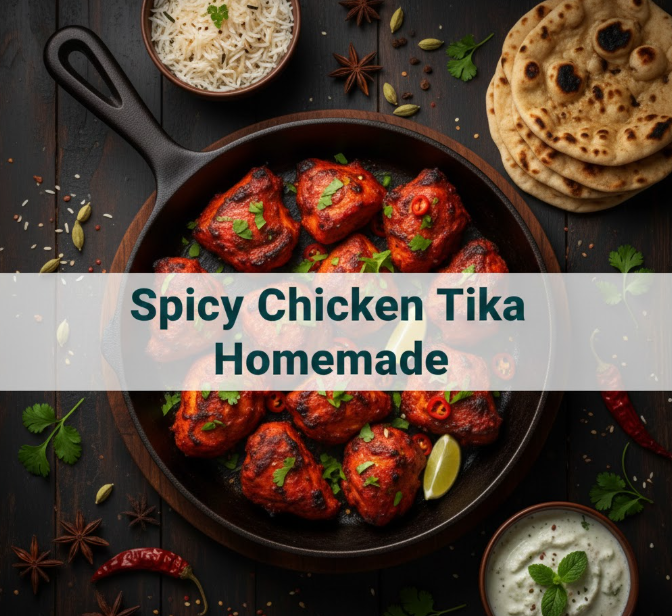
It Seems That Making Spicy Chicken Tikka at Home is Much Different, and This is Why
You enter an Indian restaurant and you are greeted with that smoky, spiced smell that is coming out of the kitchen. You are salivating at the thought of soft chicken bites with the juicy char and the strong tastes. However, the most interesting thing is that you can do this magic in your own kitchen.
Making spicy chicken tikka yourself is not only about saving money or not spending time going to the restaurant. It is all about what you want to put in your food, setting the heat to suit your taste, and making everyone who has a seat at your table to amaze. By preparing it yourself, you pick your own fresh ingredients, omit what you do not need, and end up with a meal that is even better than takeout.
This will be a step-by-step guide to everything you need to know. You will learn the tricks behind selecting the right chicken cuts to marinade it with and nailing the perfect marinade to make it extraordinary chicken tikka. This recipe is your best option whether you are preparing a dinner for your family or you are having a party.
What is so Special about Chicken Tikka
Chicken tikka is also a Punjabi dish that is generations old. Tikka is the Hindi and Urdu word that translates to chunks or pieces. In contrast to chicken curry, tikka is dry and is characterized by bold and unelaborated flavors with dense gravy.
The dish has become famous all over the world due to the fact that it provides a lot of taste in a single bite. Every chicken is moistened in a yogurt-based marinade that is packed with spices. Then it goes to the high heat which leaves a slightly burnt surface and the inside juicy and tender.
The homemade spicy chicken tikka is differentiated by the marinade. Classic ones employ the yogurt as a base as it softens the meat and provides a tangy taste. Spices such as cumin, coriander and garam masala create flavor layers. Red chili and cayenne give the spiciness that makes your taste buds sing.
Gathering Your Ingredients
The Chicken
Select chicken thighs or breasts without bones or skin. Thighs are more juicy and tolerate higher temperatures, but breasts will work in case that is preferable to you. To make 4-6 serves, about 2 pounds of chicken will be required.
Chop the chicken into 1.5-inch cubes. This is a good size to cook, and a good proportion of char on the outside and tender on the inside. Smaller ones dry up, and the bigger ones fail to cook.
Marinade Components
| Ingredient | Amount | Purpose |
|---|---|---|
| Plain yogurt | 1 cup | Tenderizes and gives a tang |
| Lemon juice | 3 tablespoons | Brightens flavors, tenderizes |
| Ginger paste | 2 tablespoons | Adds spiciness and richness |
| Garlic paste | 2 tablespoons | Mandatory spicy base |
| Red chili powder | 2 teaspoons | Principle source of heat |
| Cayenne pepper | 1 teaspoon | Extra kick |
| Turmeric powder | 1 teaspoon | Color and earthiness |
| Cumin powder | 1.5 teaspoons | Smoky, earthy flavor |
| Coriander powder | 1.5 teaspoons | Citrusy balance |
| Garam masala | 1 teaspoon | Complex spice blend |
| Salt | 1.5 teaspoons | Brings it all to life |
| Vegetable oil | 2 tablespoons | Helps spices stick |
Optional Additions
The Kashmiri chili powder gives a vivid red color and does not give excessive heat. The look of a restaurant is achieved with food coloring (red or orange), but it is all visual. Kasuri methi (dried fenugreek leaves) gives the restaurant taste.
Truly, it is the Making of the Splendid Marinade
Mixing Technique
Begin with room temperature yogurt in a large bowl. Spices do not mix with cold yogurt. Blend it until it becomes smooth and creamy with the appearance of lumps.
First add your ginger-garlic paste. Mix thoroughly. Ginger and garlic are preferable but jarred paste saves time without losing much of the taste.
At this point, stir in all your dry ingredients: red chili powder, cayenne, turmeric, cumin, coriander, garam masala and salt. Blend all ingredients until the marinade acquires a homogenous color.
Lastly pour the lemon juice and oil. Lemon acid will require time to act upon the chicken, and oil will assist in the marinade covering every bit equally.
Heat Level Adjustments
Extreme spice is not liked by everyone. Change the heating to your comfort:
- Mild: 1 teaspoon red chili powder, omit cayenne
- Medium: Do not alter the recipe
- Extra Hot: Add cayenne to 2 teaspoons, chopped green chilies
- Nuclear: Add habanero or ghost pepper flakes (use sparingly!)
Keep in mind that it is possible to add more heat to the table using additional chili powder or hot sauce. Once it is mixed in you cannot take it away.
The Marinating Process
Time Matters
Put the cubes of chicken in the marinade. Massage the marinade into each piece using your hands (wearing gloves with hot peppers). The chunks are supposed to be fully coated in each case.
Cover the bowl with a plastic wrap or put all in a zip-lock bag. Allow at least 2 hours of refrigeration. This time is required to break down the protein in the yogurt and lemon juice leaving the chicken very tender.
To achieve optimum results, marination duration should be 6-8 hours or overnight. The spices infiltrate further providing more complex flavors. Don’t go past 24 hours though. Excess of time in acidic marinade makes the texture mushy.
Room Temperature Before Cooking
Take out the marinated chicken from the fridge 30 minutes prior to cooking. This is because cold chicken striking against hot heat cooks unevenly. Chicken is best seared at the room temperature, and remains juicier inside.
Cooking Methods Explained
Grill Method (Most Authentic)
Using chicken on skewers helps in holding the pieces so that they do not fall in between grills. In case of wooden skewers, it is recommended that they are soaked in water for 30 minutes.
Warm your grill to medium-high temperature (approximately 400°F). Grease the grates to avoid sticking.
Place skewers on the grill. Cook for 6-7 minutes per side. You desire apparent char marks and caramelization. The surface must appear slightly blackened in areas and the interior must be 165°F using a meat thermometer.
Brush with melted butter or ghee in the final few minutes. This gives a depth and contributes to that restaurant quality finish.
Oven Method (Most Convenient)
Preheat your oven to 450°F. Prepare a baking sheet with aluminum foil and put a wire rack at the top. The rack will enable air flow, which eliminates soggy bottoms.
Place the chicken pieces on the rack with distances in between the chicken pieces. Steaming rather than roasting is due to crowding.
Bake between 20-25 minutes flipping in between. To add additional char, change to broil mode during the final 2-3 minutes. Broiling must be closely monitored since things have a tendency of burning.
Stovetop Method (Quickest Option)
Over medium high heat, heat a cast-iron skillet or grill pan. Add a tablespoon of oil.
Cook chicken in small portions, not too many. All the pieces must be in touch with the hot surface. Grill 4-5 minutes on each side until charred and cooked.
It is an excellent way to go when the weather is not kind to the outdoor grilling process.
Preparing Your Spicy Chicken Tikka
Traditional Accompaniments
Your spicy chicken tikka can be served with:
- Mint Chutney: Refreshing and chilled, it soothes the spiciness to a perfect fit
- Onion Rings: Raw onions soaked in lemon juice and salt
- Lemon Wedges: Increased brightness on demand
- Naan or Roti: Scoop all the leftovers
- Basmati Rice: It is a blank canvas to the vibrant tastes
For more delicious recipe ideas and culinary inspiration, explore our collection of trending dishes that will elevate your home cooking experience.
Plating Tips
Lay the pieces of chicken on a hot platter. Serve with fresh cilantro leaves and cut onions. Place lemon wedges on the sides.
To serve individually put 5-6 pieces on each plate with a small bowl of mint chutney. To add freshness and color add a slice of cucumber and tomatoes.
Common Mistakes to Avoid
Overcooking the Chicken
Even the finest marinade cannot make dry, tough chicken any better. Use a meat thermometer. Pull the chicken at 165°F. It is rested at 170°F by carryover cooking.
Skipping the Marinade Time
Marinating chicken hastily leaves you with spiced chicken on the surface. You are not getting the nice feel and rich taste that a good marinating brings.
Not Drying Excess Marinade
Excessive wet marinades do not allow the process of charring. Before cooking, shake off marinade off each piece. You desire the chicken to be covered, not dripping.
Using Low Heat
That char and caramelization is formed by high heat. Medium or low heat simply boils the chicken and makes it pale and boring.
Storage and Meal Prep
Refrigeration
Cooked chicken tikka can be stored in an airtight container in the fridge within a 3 day time frame. Warm in the 350°F oven for 10 minutes or microwave on medium strength.
Freezing
Freeze tikka till it is frozen up to 2 months. When completely frozen place them on a baking sheet and then put them in a freezer bag. This does not allow them to stick together.
Thaw overnight in refrigerator, and then reheat.
Marinating Ahead
Marinate the chicken and prepare the marinade a day before. This is in fact enhancing the taste. You can simply take it out of the refrigerator and then you are half way prepared to cook something when you are ready to do that.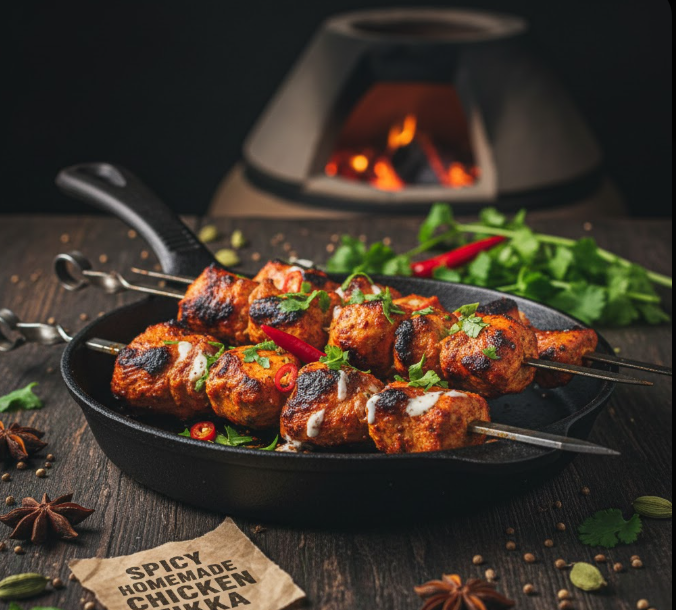
Beyond the Basics: Variations to Explore
Smoky Tikka
To give your marinade the taste of tandoor, add liquid smoke (1/4 teaspoon). Or smoke at home by heating a small piece of charcoal until it turns red-hot then put in a small bowl over the marinated chicken drizzled with oil and cover with a lid and leave it for 10 minutes.
Creamy Tikka
You can add 2 tablespoons of heavy cream or cashew paste to your marinade. This develops a more balanced, less acidic taste profile.
Green Tikka (Hariyali Tikka)
Instead of the red chili powder, use green chilies, and put in mint-cilantro paste into the marinade. This one has varying heat and bright herby tones.
Health Benefits You are Receiving
Chicken tikka is a source of protein with no heavy oils and cream in the sauces. A single serving (approximately 6 pieces) offers:
- 35-40g of protein
- Essential B vitamins
- Minerals such as selenium and phosphorus
- Turmeric and other spices antioxidants
Probiotics are added (prior to cooking) through the aid of the yogurt marinade. Anti-inflammatory properties are found in spices such as turmeric which contains curcumin.
Home cooking spicy chicken tikka will allow you to keep the amount of oil within your control and not have to add to it the extras of a restaurant such as butter basting and the addition of cream. Learn more about the health benefits of Indian spices and how they contribute to overall wellness.
Frequently Asked Questions
Is it possible to use Greek Yogurt and replace regular yogurt?
Yes, but dilute it with a tablespoon or two of milk or water. Greek yogurt is also thicker and may not stretch evenly around the chicken.
Why is my chicken tikka not red like restaurants?
Kashmiri chili powder (mild heat, bright red) and food coloring are commonly used in restaurants. Regular chili powder is darker. Optional red food coloring adds the vibrancy of the look of a restaurant.
Is it possible to make it with chicken breast only?
Absolutely. Chicken breasts are no problem but pay attention to them as they are easily dried out compared to the thighs. Before cutting into cubes, pound them to even thickness and then cut them into cubes.
What then are the signs that the chicken is cooked?
Use a meat thermometer. At 165°F, chicken is safe. Outside must be charred, and juices clear when punctured.
Is it possible to prepare this dish less spicy for children?
Reduce the red chili to 1/2 teaspoon and omit cayenne altogether. You can also divide some chicken prior to the addition of the hot spices and prepare a mild batch in addition to the spicy one.
What if I do not have garam masala?
Quickly substitute: 1/2 teaspoon cumin, 1/4 teaspoon coriander, 1/4 teaspoon cardamom, pinch of cinnamon, pinch of black pepper.
Is it possible to apply this marinade to other proteins?
Yes! This marinade is terrific with paneer (Indian cottage cheese), shrimp, fish, lamb or with mixed vegetables such as bell peppers and cauliflower.
Do I need special equipment?
Not really. All you need to make basic marinating is a bowl, a grill or oven, and a meat thermometer. Grilling is also easier with skewers, which are not a necessity.
All Things Considered, Making Restaurant Quality Tikka is Very Easy
Spicy chicken tikka homemade will make your kitchen a place where the restaurant quality food occurs. It is not a complicated process. It takes quality ingredients, time in marinating and proper heat for cooking.
When using this simple recipe, begin with it, and alter it to your liking. Perhaps you are a garlic-loving person, or want not as much spiciness. Maybe you would like the smoky variant or you would like to test various proteins. Whenever you prepare it you will find you have added little touches that will make the dish distinctive.
This customization is what makes homemade food beautiful. You do not have to go with the vision of a restaurant on the ideal level of spices or their pre-determined portions. You get what you want, the way you want it and when you want it.
The first one you make may not resemble the picture on your favorite Indian restaurant. That’s okay. The flavor will exist and as time goes by, the method also perfects itself. The next day you will be the one that people will go to to get the recipe and wonder how you nailed those complicated flavors at home.
Spicy chicken tikka homemade is not a recipe anymore. It is an art that will impress your guests, quench your cravings and add exciting tastes to your usual meals list. After you get used to it, you will not know why you needed to get it anywhere.